If you have been stretching every morning for months and your knees or your back still hurt, you are not doing it wrong. You are doing half of it.
This is probably the single most common thing I correct when I walk into a new client’s home. They have a stretching routine. They are consistent with it. And they are still in pain, which makes them think their body is broken. It is not. Stretching was just never going to be enough on its own.
Tight is not the same as weak
Here is the question almost nobody asks: how do you know your muscles are tight rather than weak?
Most people cannot tell the difference, because both of them feel the same from the inside. Both feel like restriction. Both feel like something is not moving the way it should. So people reach for the same tool every time, which is a stretch, and then wonder why six months of stretching did not change anything.
Pain is pain at the end of the day. What matters is what is causing it. A weak muscle that you stretch harder does not become a strong muscle. It becomes a weak muscle that is now also loose, and a loose weak muscle supports your joint even less than it did before.
The rubber band in the fridge
The way I explain this to clients is with a rubber band.
Take a rubber band out of the refrigerator and pull it. It is stiff, it resists you, and if you pull hard enough it snaps. It is brittle. Nothing about that cold band wants to lengthen.
Now take a rubber band that has been sitting out in the sun. It stretches easily. It gives. You can pull it much further with much less force and it goes right back to where it started.
Your muscles are the rubber band. Exercise is the sun.
When you stretch a cold muscle you are pulling on the band from the fridge. You get very little range, it fights you the whole way, and you are one bad morning away from straining something. When you warm the tissue up first with actual work, you are pulling on the band from the sun. The same stretch suddenly does what you wanted it to do in the first place.
So what does that change about your morning?
Not as much as you would think. You do not have to abandon stretching. You have to move it.
- Do five to ten minutes of easy movement first. Not a workout. Marching in place, sit-to-stands out of a kitchen chair, arm circles, anything that gets blood into the area and raises your body temperature a little.
- Then strengthen what is actually weak. For most people with knee pain that means glutes, hamstrings and quads. For most people with back pain it means hips and core.
- Then stretch, at the end, while everything is still warm.
That is the whole correction. Same amount of time, different order, and the order is what was costing you the results.
Why this matters more after 40
Younger bodies get away with a bad order because they are warm most of the day anyway. If you spend eight or nine hours at a desk, you are not warm. You are the band in the fridge, all day, every day, and then you stand up and ask your knees to perform.
This is exactly why I train people in their own homes. I get to see the chair you actually sit in, the stairs you actually climb, and the routine you already have. Then we fix the order instead of handing you a brand new routine you will abandon in three weeks.
The short version
- Stretching alone does not resolve joint pain, because it does not address weakness.
- You usually cannot tell tight from weak by feel, so strengthen either way.
- Warm tissue lengthens. Cold tissue resists and tears.
- Move first, strengthen second, stretch last.
If you have been stretching faithfully and getting nowhere, that is not a discipline problem. It is a sequencing problem, and it is a very fixable one. book a free discovery call and we will look at what your body is actually asking for.
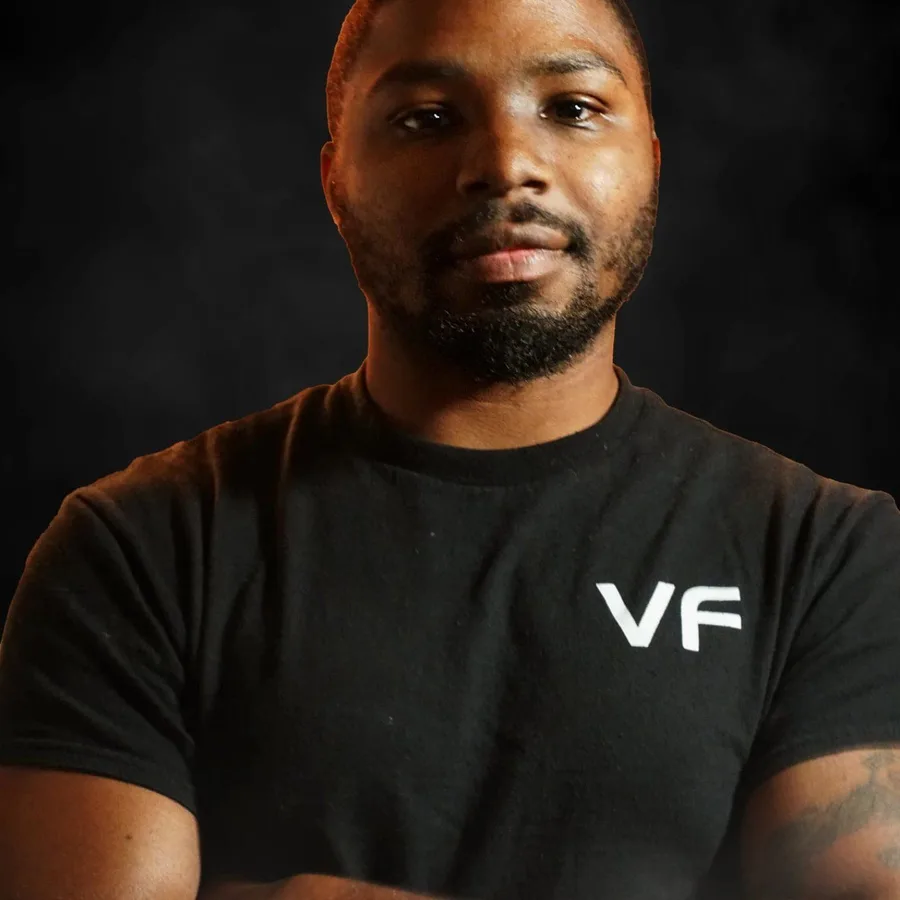
Written by
Kristoff "Kris" Warsaw
Kris is the owner and head trainer at Versed Fitness, training clients in their own homes across Baltimore, Towson and Pikesville. He specializes in working with people whose joint pain has made ordinary exercise feel impossible.