Want Kris to look at your own situation? The first call is free and takes 20 minutes.
Yes. Strength training after 70 is one of the best things you can do to stay independent. Two short sessions a week, using your body weight or light bands, help you get up from a chair, climb stairs, carry groceries and stay steady on your feet. Start light, build slowly, and it is safe for most people.
Why does strength matter more after 70?
We lose muscle as we age unless we use it, and you notice it in small ways first: pushing off with your hands to get out of a low chair, reaching for the stair rail, setting the grocery bags down halfway to the car. That is mostly muscle, and the good news is that muscle responds to training at any age. That is why strength training after 70 pays off so quickly.
It also keeps you on your feet. According to the CDC, falls are the leading cause of injury for adults 65 and older, and over 14 million, or 1 in 4, report falling every year (CDC, Older Adult Falls Data). Stronger legs and better balance are what catch you when you trip, so strength training after 70 is really fall prevention too.
How much strength training do you need after 70?
The CDC recommends that adults 65 and older do muscle-strengthening activities on at least 2 days a week that work all the major muscle groups: legs, hips, back, abdomen, chest, shoulders and arms (CDC, Older Adult Activity: An Overview). That sits alongside about 150 minutes a week of moderate activity, such as brisk walking, and some balance work.
Four exercises to start with at home
Sit-to-stand
- Sit near the front of a sturdy chair, feet flat and shoulder width apart.
- Lean forward slightly and stand up, using your hands only if you need to.
- Sit back down slowly, with control.
- Eight to ten reps, two sets.
Wall push-up
- Stand an arm’s length from a wall, hands on the wall at shoulder height.
- Bend your elbows to bring your chest toward the wall.
- Push back to the start.
- Ten reps, two sets.
Heel raises at the counter
- Stand facing a counter, holding it lightly.
- Rise up onto your toes, then lower slowly.
- Twelve reps, two sets.
Step-ups with the rail
- Hold the stair rail and step up onto the bottom step.
- Bring the other foot up, then step back down.
- Eight on each leg, two sets.
How do you start strength training safely?
- Twice a week, with at least a day off in between.
- Finish each set feeling you could have done two or three more.
- Muscles working hard is normal. Sharp pain or joint pain is not: stop and adjust.
- Add reps before you add weight. For example, go from eight sit-to-stands to twelve before you hold anything.
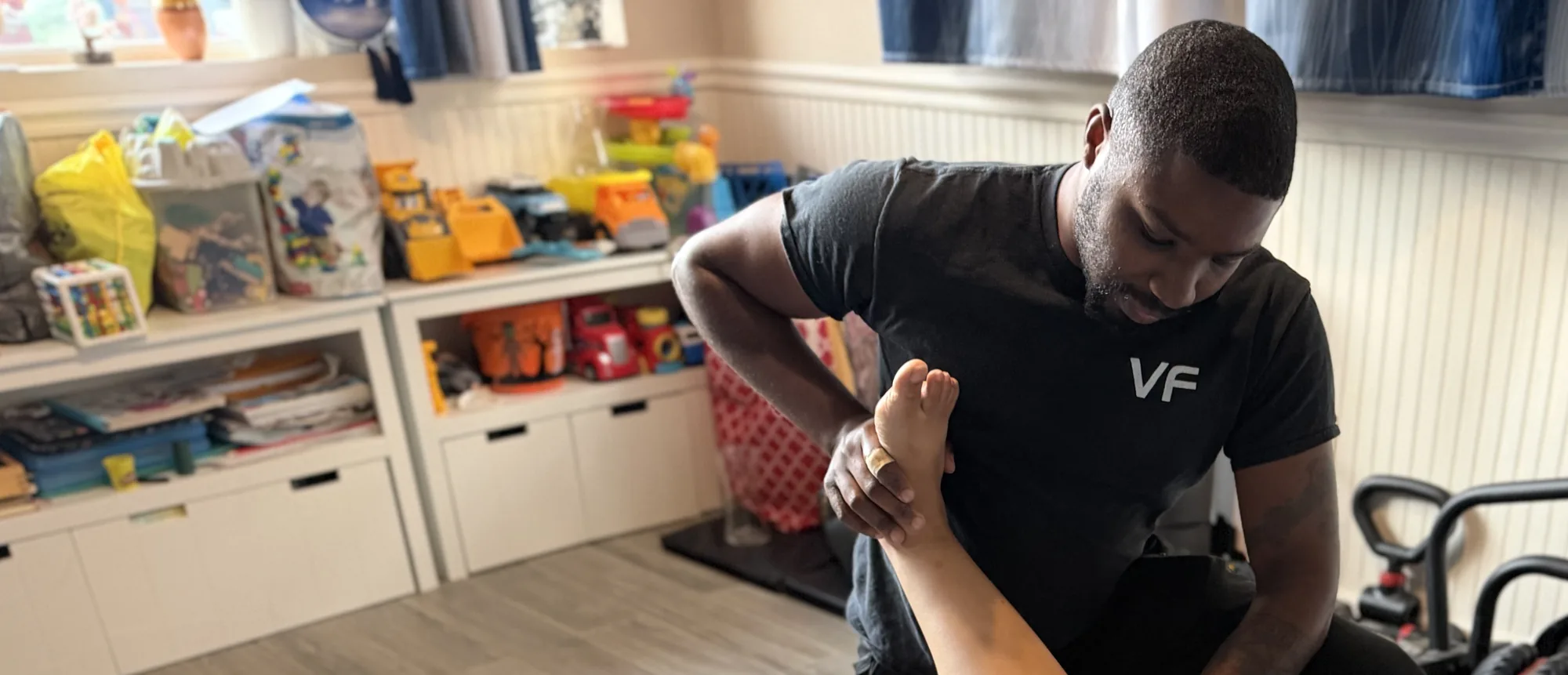
I’m Kris Warsaw, an ACE Certified Personal Trainer and Functional Training Specialist. I train adults at home across Baltimore, Towson and Pikesville, and many of my newest clients are in their 70s. Every one of them starts with simple moves like these, at a level that feels easy, and builds from there.
Check with your doctor before starting anything new, especially if you have a heart condition, have had recent surgery or a fall, or get dizzy or short of breath with effort.
Frequently asked questions
Is it too late to start strength training at 75 or 80?
No. The CDC’s advice for older adults is to be as physically active as your abilities and conditions allow, because some activity is better than none. Start with the lightest version of each exercise and build up.
Do I need weights to strength train after 70?
No. Your body weight, a sturdy chair, a counter and a resistance band are enough to start. Light dumbbells can come later, once the movements feel easy.
How often should I strength train after 70?
Two days a week is the CDC’s recommendation for adults 65 and older, working all the major muscle groups. Leave a day between sessions so your muscles can recover.
If you would like a plan built around your body and your home, that is exactly what I do. Book a free 20-minute discovery call, or read more about training in your 60s, 70s and beyond. Next in this series: what the best type of exercise looks like after 70.
Sources
Written by
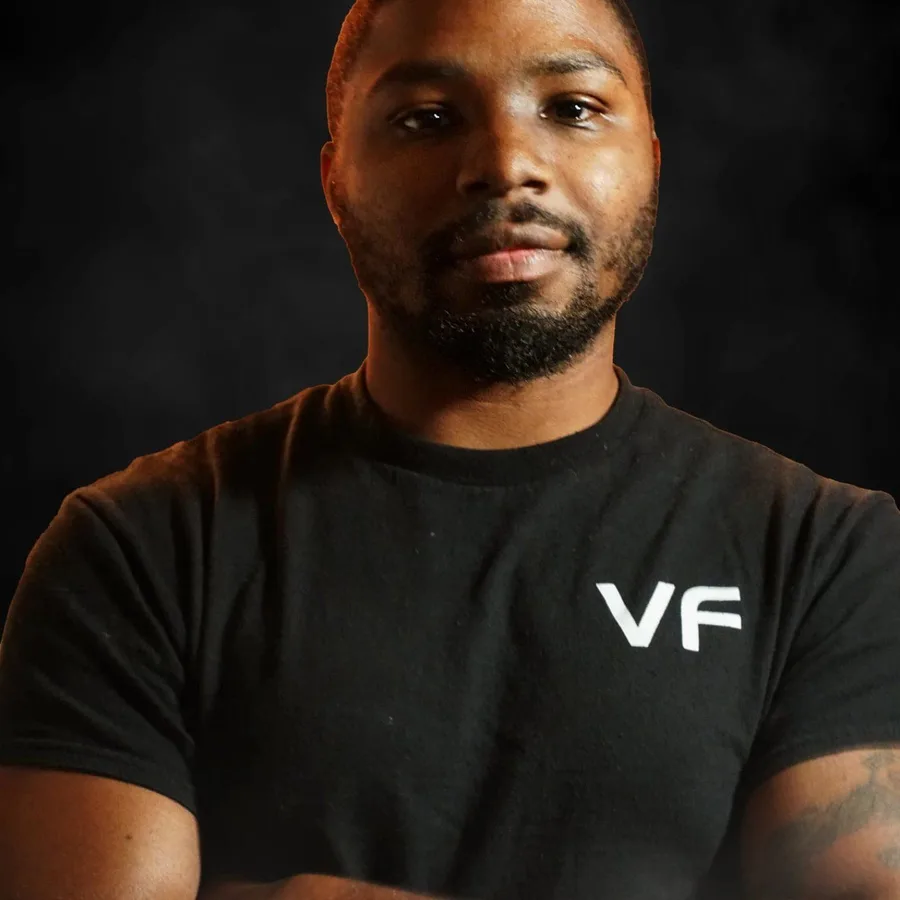
Kristoff "Kris" Warsaw
Kris is the owner and head trainer at Versed Fitness, training clients in their own homes across Baltimore, Towson and Pikesville. He specializes in working with people whose joint pain has made ordinary exercise feel impossible.